Livia Dualis · Artwork gallery
Explore the collection.
Explore the complete exhibition and sales catalogue: mirrored paintings, wildlife portraits and works on paper. Open each description for the artist’s words, medium and dimensions, or enquire directly about the work.
Prices are in EUR. Please contact the studio to confirm current availability. Brown Hyena Dreamscape is shown separately as sold.
Rooted in Duality ↓ Beckoning the Wild ↓ Philosophy of Aesthetics ↓ Works on paper ↓
Mirrored paintings
Rooted in Duality
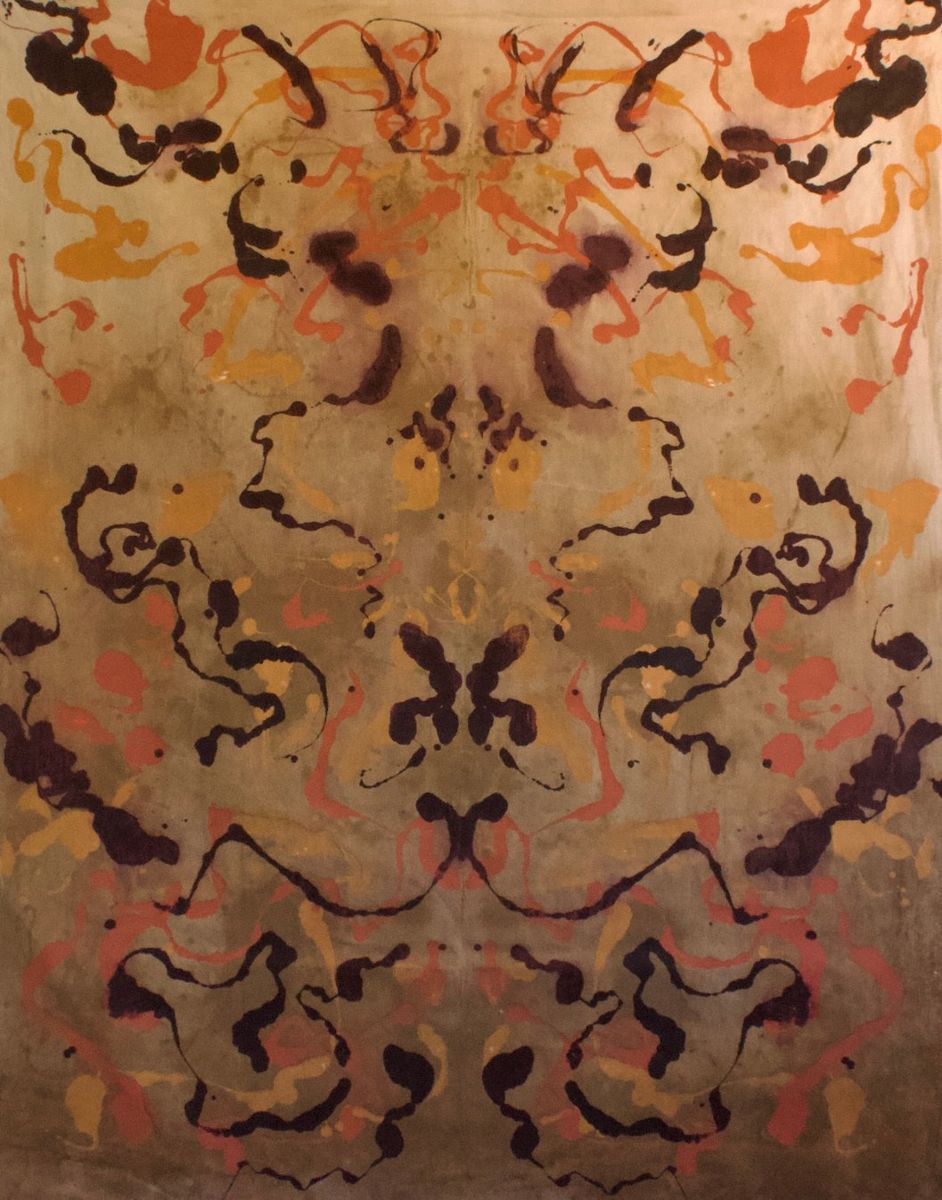
Desert Siren
Acrylic on Canvas
175 cm × 130 cm
Price on request
Description & artwork details
“Desert Siren” arrives like an ember lifted from ancestral fire — smoky, molten, and resonant with memory. The mirrored forms suggest an archetypal figure oscillating between presence and dissolution, as if spirit and body are negotiating their shared terrain. The palette echoes Namibian earth tones: ochres, reds, and charred traces reminiscent of landscapes shaped by heat and loss. In this symphony of organic movement, the painting wrestles with the tension between decay and renewal — a classic Heraclitean motif. Fire consumes, but it also clears. On a social level, the piece critiques the myth of singular identity. Instead, it proposes identity as stratified sediment: histories layered, scorched, and reformed. This work operates like a ceremony of remembering, urging a decolonial approach to selfhood where one’s inner landscape is allowed to burn and regenerate without external interference.
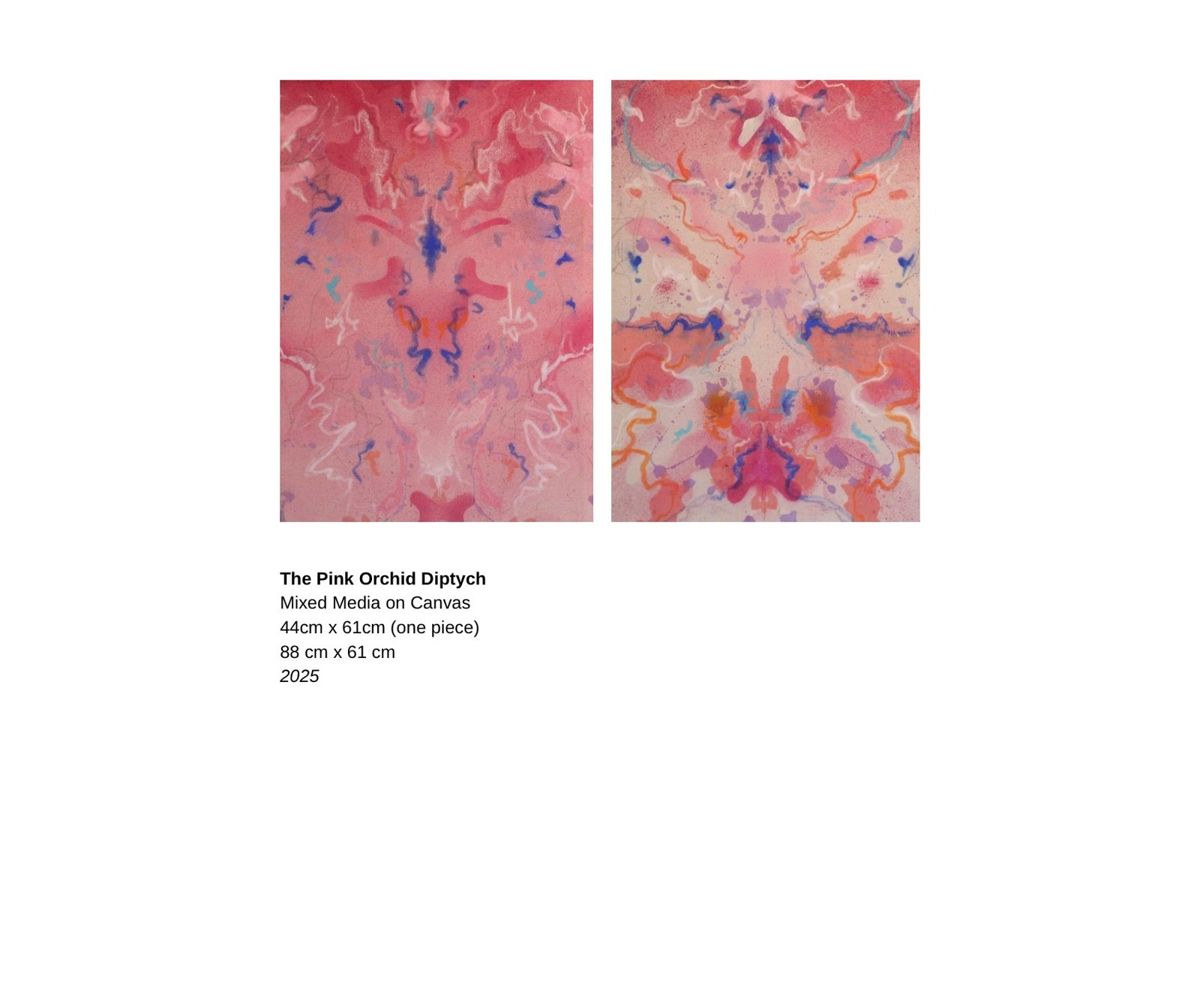
The Pink Orchid Diptych
Acrylic, Pastel on Canvas
61 cm × 88 cm
Price on request
Description & artwork details
“The Pink Orchid Diptych” blooms between delicacy and resilience. Orchids thrive in liminal zones — clinging to bark, mist, air — and this duality mirrors the hybrid identity of the artist, rooted yet airborne. The mirrored floral forms evoke both vulnerability and sensuality, suggesting an internal landscape where softness becomes a form of defiance. In a world that equates strength with hardness, this work reframes tenderness as a radical, decolonial gesture. The symmetries conjure the idea that inner beauty is not a fixed essence but an evolving arrangement shaped by climate, context, and care. This painting insists that identities, like flowers, are relational ecosystems — shaped by what nurtures them and what they survive.
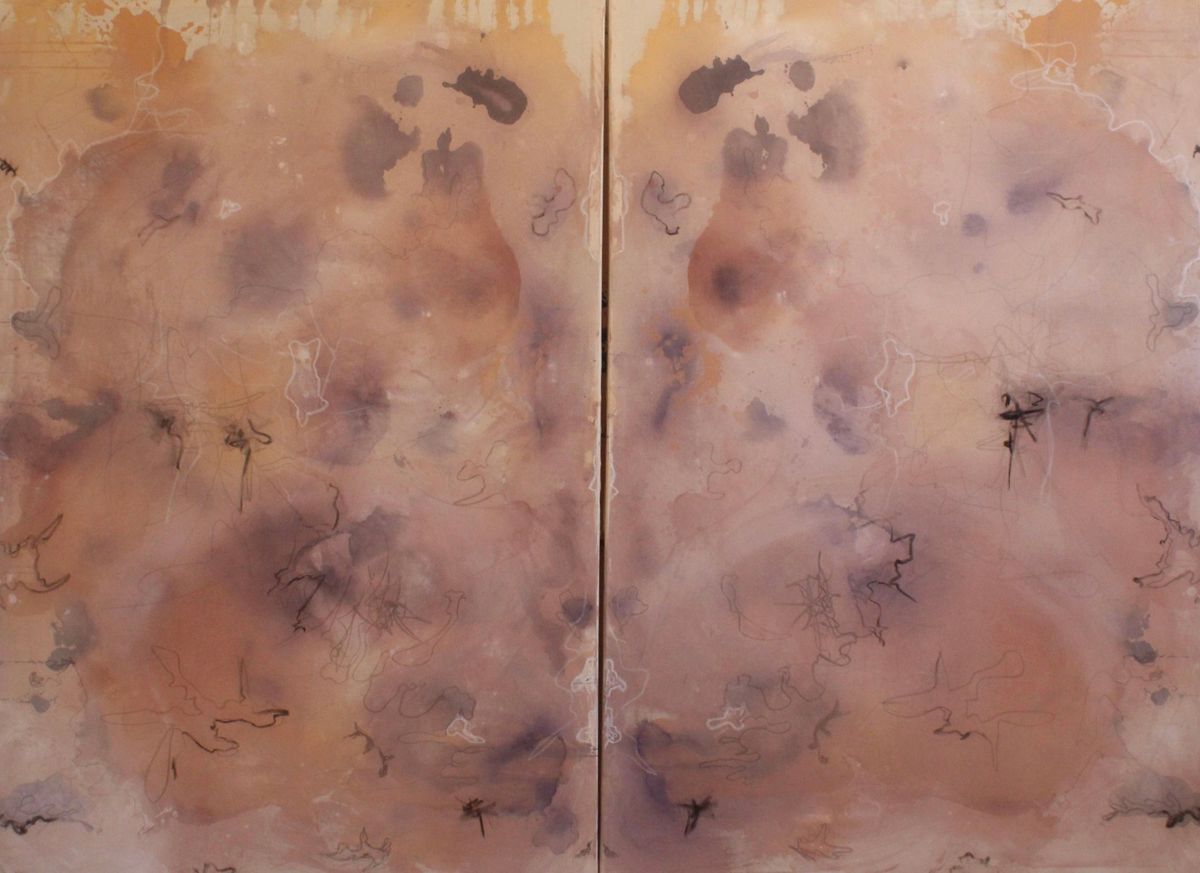
Desert Dreamscape Diptych
Acrylic, Pastel on Canvas
150 cm × 206 cm
Price on request
Description & artwork details
This diptych dissolves the boundary between outer desert and inner psyche. Soft, shifting forms evoke dune, cloud, memory and breath — merging landscape and consciousness into a single meditative field. For a Namibian soul, the desert is not empty; it is an archive. A place where silence exposes what noise conceals. In these two panels, the desert becomes a metaphysical space where the self can be stripped down to its elemental truths. Heraclitus believed that everything flows — and the desert proves this in slow motion. Sand moves like thought; wind carves like experience. This work offers a space where opposites — arid and fertile, still and alive, harsh and tender — coexist without contradiction. Its social relevance lies in its resistance to the Western gaze that sees deserts as barren. Instead, it reveals the land as intelligent, storied, and essential to decolonising how we understand place and self.
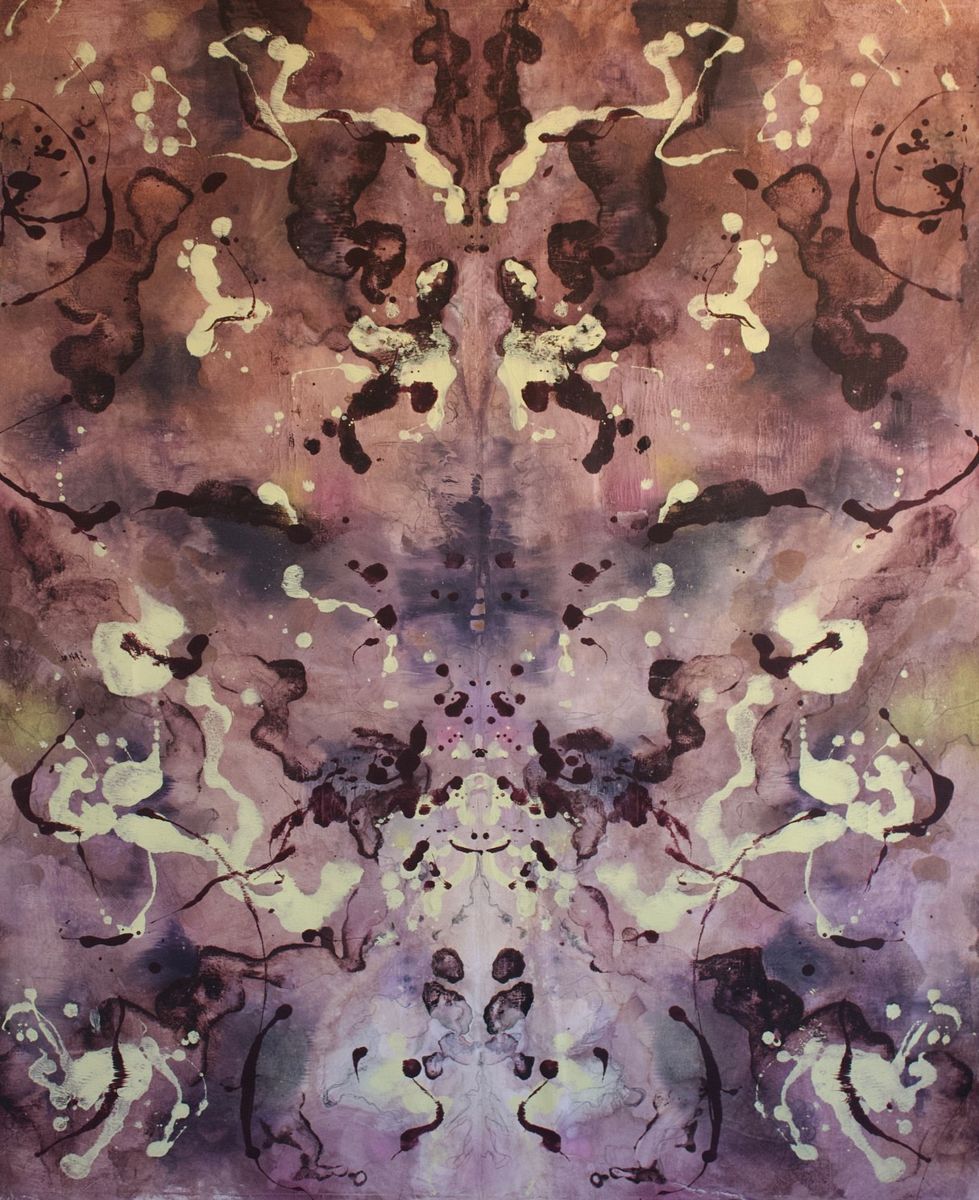
Harmonic Resonance
Acrylic, Pastel on Canvas
145 cm × 110 cm
Price on request
Description & artwork details
Harmonic Resonance explores balance not as stillness, but as vibration. Through mirrored symmetry and fluid gesture, the work holds movement and restraint in dynamic tension, suggesting that harmony emerges from calibration rather than control. Layered pigments and organic forms evoke both inner psychological states and geological processes, collapsing the boundary between interior and landscape. Rooted in the concept of my own hybrid identity, the painting reflects a Heraclitean understanding of coexistence — where opposites remain in relation without cancelling one another. Subtle instabilities within the symmetry resist fixed meaning, inviting sustained contemplation. The work proposes resonance over resolution, offering a quiet meditation on interconnectedness, perception, and the generative potential of contradiction.

The Trickster’s Mirror Diptych
Acrylic, Colored Pencil on Canvas
140 cm × 160 cm
Price on request
Description & artwork details
“Trickster’s Mirror” plays with illusion and revelation, embodying the African trickster archetype — the one who bends truth to reveal deeper truth underneath. In these pastel currents and mirrored spirits, identity becomes playful, unpredictable, and mischievously wise. The diptych suggests that the self we see in the mirror is always a trick: a fleeting intersection of mood, memory, expectation, and projection. Hybridity becomes a kind of sacred mischief, resisting rigid cultural labels by constantly transforming them. In a world that increasingly mistakes rigidity for clarity, this work celebrates fluidity as intelligence. It positions ambiguity not as weakness but as an evolutionary skill — a capacity to move between worlds, defy categorisation, and hold contradictions without collapsing.
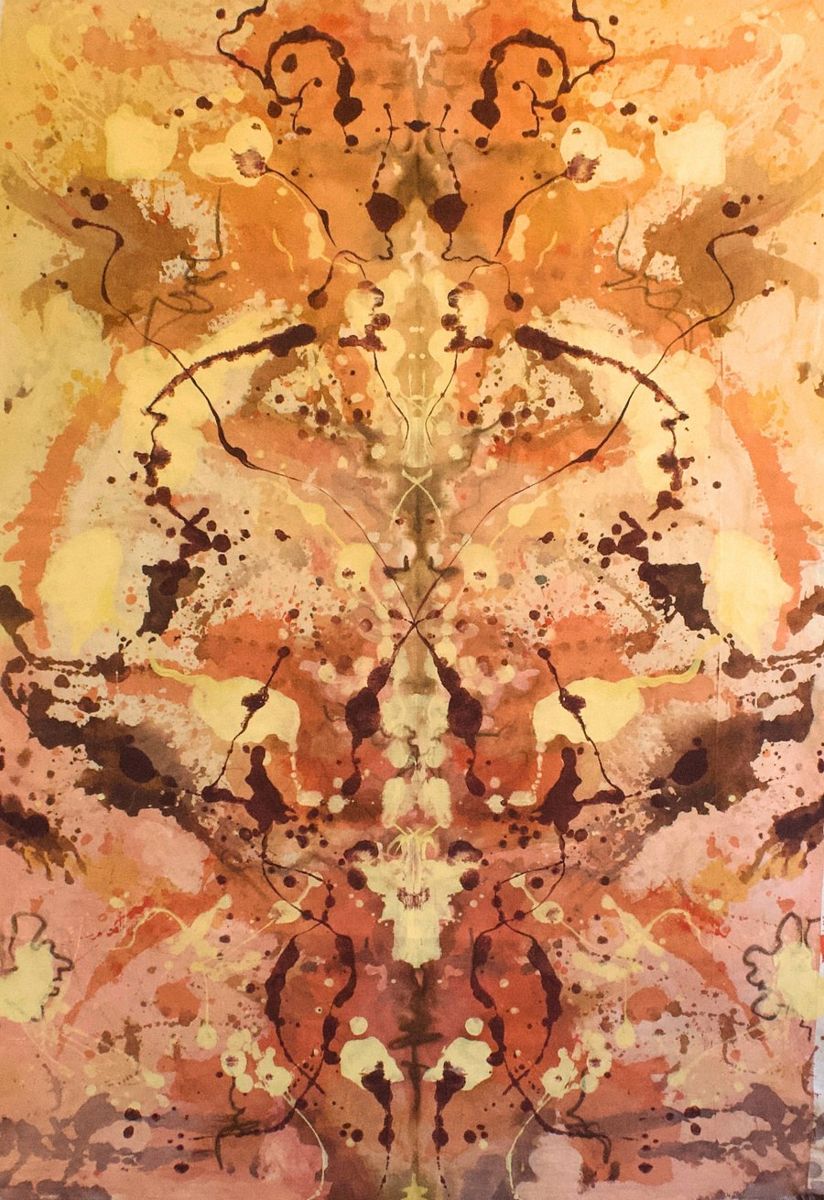
Umrhubhe — The Bow Instrument
Acrylic, Oil Pastel on Canvas
175 cm × 130 cm
Price on request
Description & artwork details
“Umrhubhe” is a visual echo of the distinctive Southern African musical bow, whose single vibrating string mirrors the precarious balance of internal and external worlds. The painting pulses with rhythmic tension, like a note held just before release. An hommage to the great Dr. Latozi Madosini Mpahleni, this work honours Indigenous Southern African sonic tradition while situating it within a contemporary abstract vocabulary. This tension embodies a central paradox: preserving cultural heritage while allowing it to evolve.Heraclitus would recognise in this piece the principle that the same string that produces sound also contains the potential for rupture. Identity too carries this fragility and resilience — especially for hybrid individuals navigating Western and African epistemologies. The painting’s activism lies in its insistence that Indigenous instruments and knowledges are not relics, but living technologies of perception, equally valid and essential in shaping global futures.
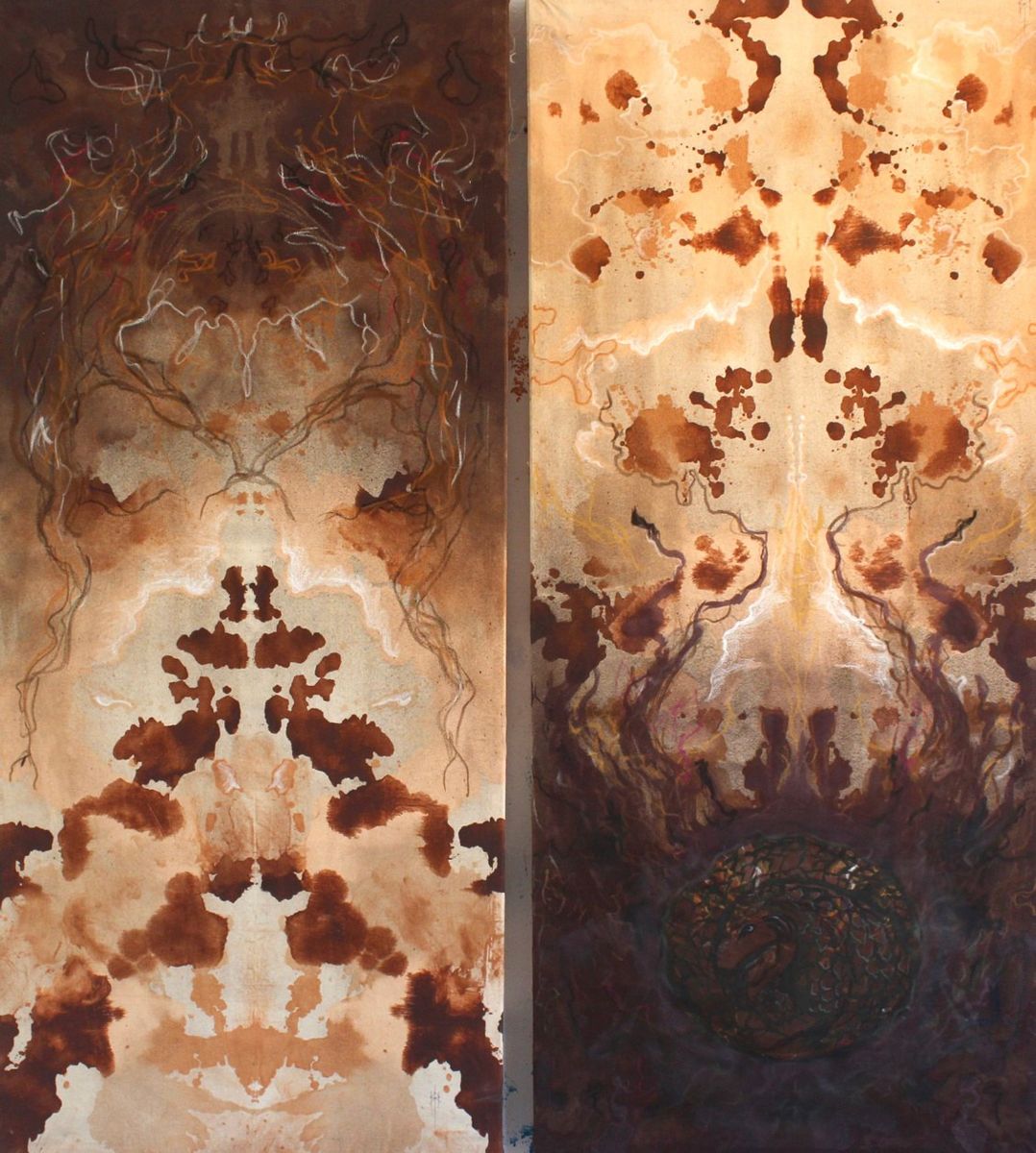
Never the Same Fire Twice (single or diptych)
Acrylic, Charcoal on Canvas
155 cm × 130 cm
Price on request
Description & artwork details
In direct response to the raging fires happening in South Africa right now, and the devastating effect they have on the wildlife; This diptych channels Heraclitus explicitly: you cannot step into the same fire twice. Each panel feels like a different mood of flame — one luminous and eruptive, the other somber and smoldering — mirroring the duality within all living beings. For a Namibian artist, fire carries ancestral weight: hearth, ritual, storytelling, warning. Yet here it becomes metaphor for identity’s perpetual mutation. The self that meets the world today is not the self that met it yesterday. The work critiques the expectation of static identity in a society obsessed with definition. It argues that to be alive — spiritually, politically, creatively — is to be in constant combustion. Through this lens, fire becomes not destruction but transformation, urging us to embrace flux as a form of empowerment.
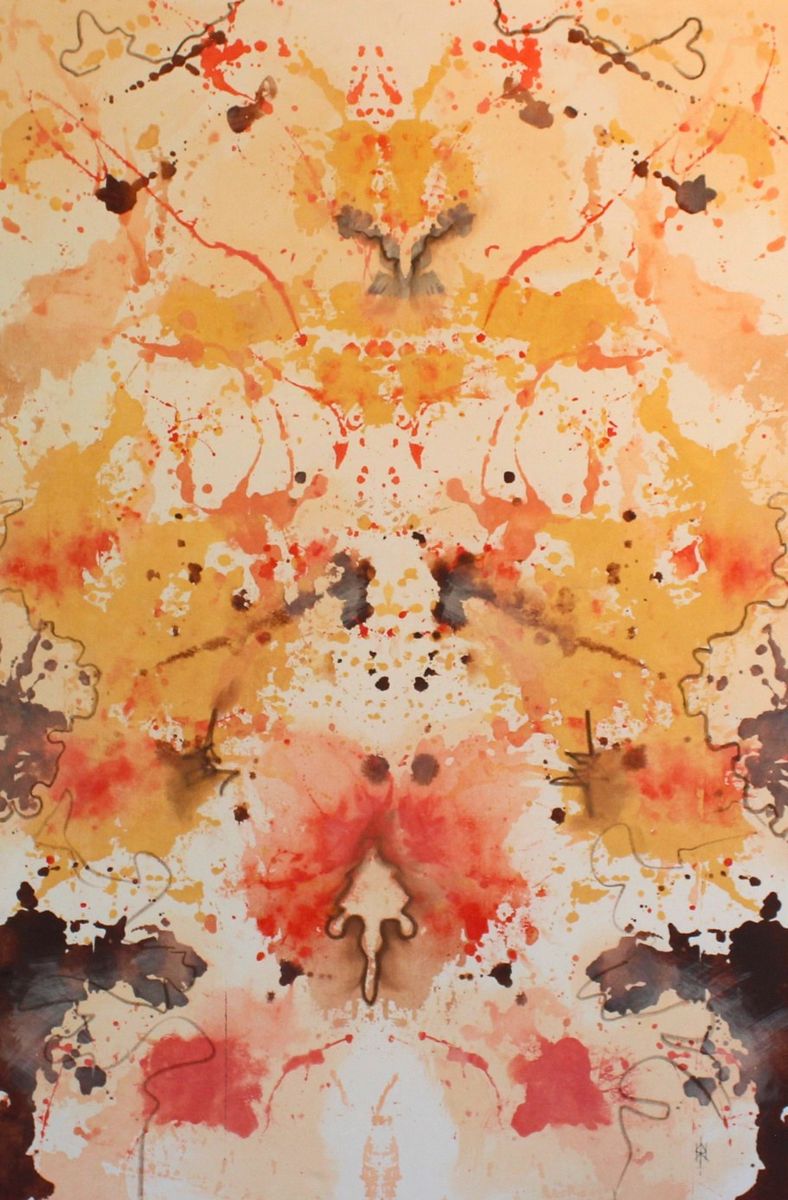
The Bow and The Lyre
Acrylic, Pastel on Canvas
140 cm × 98 cm
Price on request
Description & artwork details
In “The Bow and the Lyre”, two instruments of ancient resonance — one from African sonic lineage, the other from classical antiquity — merge into a single visual hymn. This piece embodies the dual consciousness of a Namibian artist shaped by multiple knowledge systems yet tethered to neither exclusively. It is a portrait of tension and harmony: the bow’s tautness, the lyre’s vibration, the Heraclitean belief that the finest harmony is born from strife. Within the paint’s splattered choreography, one can trace both conflict and reconciliation — the push and pull of cultural inheritance and self-invention. Socially, it becomes a manifesto for decolonisation through synthesis rather than erasure. A call to embrace the paradox of hybrid identity: that one can carry European influences without surrendering African truths, and vice versa. This work argues that creativity emerges not from purity but from entanglement.
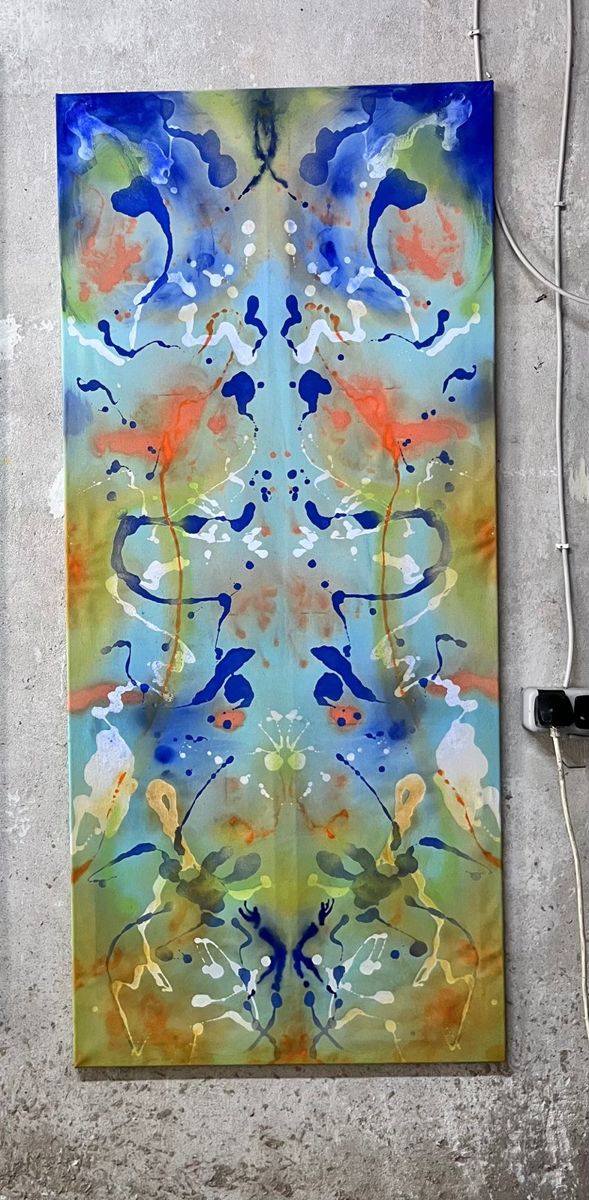
Ozymandias’ Symmetry
Acrylic on Canvas
170 cm × 65 cm
Price on request
Description & artwork details
Named after Shelley’s poem about a shattered monument that once boasted of eternal power. I wanted this piece to feel monumental but also quietly haunted by its own inevitable decay.
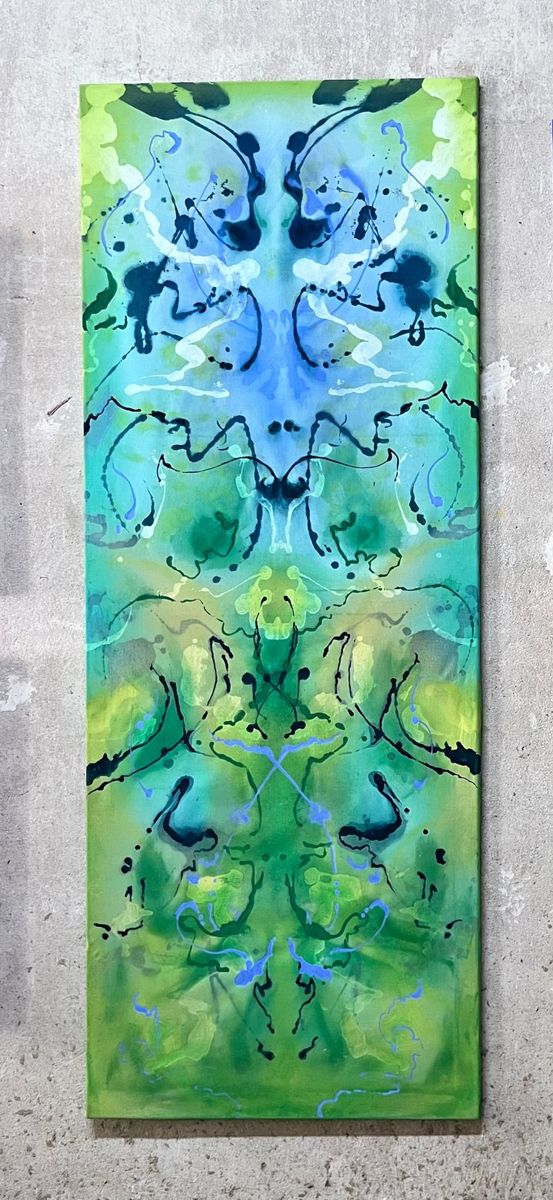
Appollonian Order
Acrylic on Canvas
170 cm × 65 cm
Price on request
Description & artwork details
Apollonian Order — Drawn from Nietzsche’s Birth of Tragedy, where the Apollonian represents clarity, restraint, and structured form. I kept the lines here crisp and disciplined, aiming for that same dream-like sense of control.

Silver Reflections
Acrylic on Canvas
120 cm × 80 cm
Price on request
Description & artwork details
Silver forms rise and branch across a ground that moves from deep blue into moss and olive, like water seeping into desert earth. Mirrored along a single fold, the image becomes a doorway, a pair of figures, a spine, or roots reaching for light, depending on who is looking. Silver is the colour of reflection: it gives back whatever the viewer brings to it. The work asks how two opposing halves can hold one shape, and what grows in the seam where they meet.
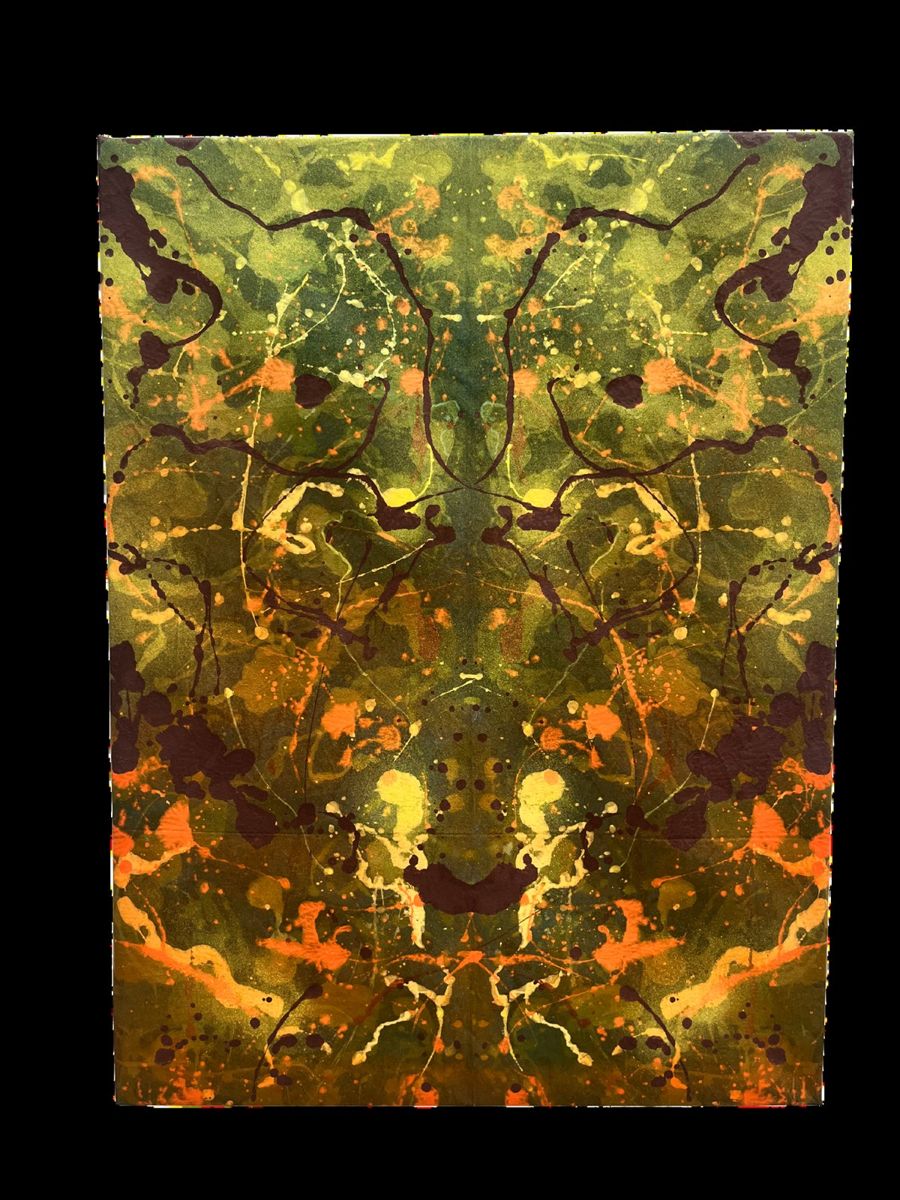
May the Leaves Fall Where they May
Acrylic on Canvas
120 cm × 90 cm
Price on request
Description & artwork details
Moss, olive and ochre spill across the canvas like a forest floor in late autumn, threaded with dark veins and sparks of burnt orange. Mirrored along a single fold, the chaos of splatter gathers into a face, a mask, a creature watching back. The work is about surrender: what f